Frida Kahlo: Life, Art, Legacy and Key Facts (1907–1954)
Frida Kahlo turned personal tragedy into art, producing around 200 works that draw millions of visitors to museums worldwide. Her self-portraits, infused with pain, passion, and Mexican folk culture, have made her a global icon.
Born: July 6, 1907, Coyoacán, Mexico ·
Died: July 13, 1954, Coyoacán, Mexico ·
Known for: Self-portraits, vibrant colors, surrealism ·
Spouse: Diego Rivera (m. 1929; div. 1939; m. 1940) ·
Major exhibition: First solo exhibition in Mexico, 1953
Quick snapshot
- Self-portraits address identity, pain, and the body (Britannica)
- Began painting after severe bus accident (Biography.com)
- Bisexual identity documented by historians (BIO)
- Whether her death was suicide or accidental overdose (Frida Kahlo Foundation)
- Exact number of female lovers debated by historians (BIO)
- 1925 bus accident changed her life and art (Context Travel)
- 1953 first solo exhibition in Mexico (Frida Kahlo Foundation)
- Continued reinterpretation through queer and disability lenses (Disability Rights Florida)
- Ongoing museum exhibitions globally (National Museum of Women in the Arts)
Seven key facts about Frida Kahlo, one pattern: her identity as a disabled, bisexual, indigenous woman defined her art every bit as much as her technique.
| Label | Value |
|---|---|
| Full name | Magdalena Carmen Frida Kahlo y Calderón |
| Year of birth | 1907 |
| Year of death | 1954 |
| Nationality | Mexican |
| Major subject | Self-portraits |
| Number of known works | Approximately 200 |
| Known for | Indigenous Mexican style, surrealism, queer identity |
The implication: Kahlo’s biography is inseparable from her art — the person and painter are one subject.
Why is Frida Kahlo so famous?
What made her self-portraits iconic?
- Her self-portraits directly address identity, pain, and the body (FridaKahlo.org).
- She painted mostly herself after the bus crash, turning the mirror into a canvas (Biography.com).
- Vibrant colors and Mexican folk influences set her work apart (FridaKahlo.org).
How did her personal life influence her art?
- Her marriage to Diego Rivera — one of the most famous artist couples of the 20th century — shaped her public image (Context Travel).
- Her affairs, including with Leon Trotsky and women like Chavela Vargas, added scandal and depth (BIO).
- Chronic pain from the accident appears in paintings like “The Broken Column” (Biography.com).
Kahlo’s fame rests on her suffering — the bus accident, Rivera’s betrayals, and her broken body became the raw material for images that now sell for millions.
The pattern: Kahlo’s identity as a disabled, bisexual, indigenous Mexican woman made her a hero to multiple movements — feminism, queer rights, disability justice — none of which existed as mass forces during her lifetime.
What happened to Frida Kahlo?
What was her childhood like?
- She was the third of four daughters, born in 1907 in Coyoacán (National Museum of Women in the Arts).
- Her father was of German-Hungarian-Jewish descent; her mother was Spanish and Mexican Indigenous (National Museum of Women in the Arts).
- She contracted polio at age 6, which left her right leg permanently deformed (Biography.com).
How did the bus accident change her life?
- On September 17, 1925, a bus she was riding collided with a streetcar (Context Travel).
- The accident caused multiple fractures: her spine, collarbone, ribs, pelvis, and legs (Biography.com).
- It left her in chronic pain and led to more than 30 surgeries over her lifetime (FridaKahlo.org).
- During recovery, she began painting, using a specially designed easel that allowed her to work from bed (FridaKahlo.org).
A teenager who should have become a doctor turned into one of history’s most copied painters — not despite the accident, but because of it. The bus crash gave her both subject matter and time.
The catch: without the accident, Kahlo may never have become a painter at all. The trauma that defined her also made her.
What are 10 facts about Frida Kahlo?
What is less known about her personal life?
- She studied at the National Preparatory School, where she met Diego Rivera for the first time (Context Travel).
- She and Rivera married in 1929, divorced in 1939, and remarried in 1940 (Context Travel).
- She had an affair with Leon Trotsky while he was in exile in Mexico (BIO).
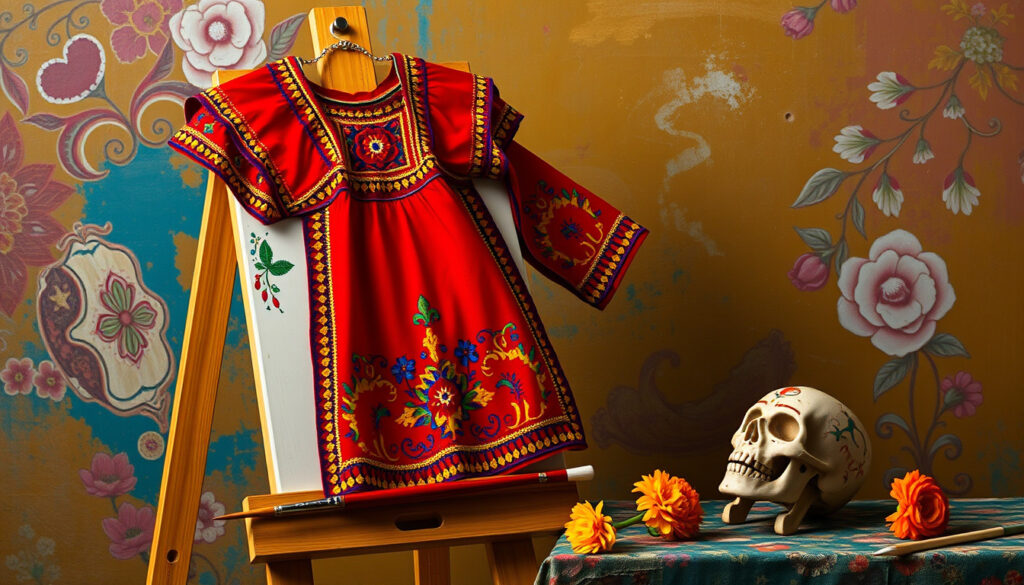
- She dressed in traditional Tehuana clothing to emphasize her indigenous roots (FridaKahlo.org).
What are key milestones in her career?
- In 1938, she had her first solo exhibition at the Julien Levy Gallery in New York (National Museum of Women in the Arts).
- In 1939, the Louvre bought “The Frame,” making her the first Mexican artist to enter the collection (National Museum of Women in the Arts).
- Her first solo exhibition in Mexico opened in 1953, just one year before her death (Frida Kahlo Foundation).
The trade-off: Kahlo painted little, but every work carries her full voice — no filler, no commissions, only the stories that mattered to her.
Why was Frida Kahlo LGBTQ?
Who were her known female partners?
- She had relationships with several women, including singer Chavela Vargas and artist Georgia O’Keeffe (BIO).
- Divorce from Rivera in 1939 freed her to explore those relationships more openly (Context Travel).
How does her art reflect her sexuality?
- Self-portraits like “Self-Portrait with Cropped Hair” show her in a man’s suit, challenging gender norms (Britannica).
- Themes of doubled bodies and androgyny appear in works like “The Two Fridas” (FridaKahlo.org).
- Contemporary scholars interpret her self-portraits as queer visual statements (BIO).
The pattern: Kahlo never publicly labeled her sexuality, but her relationships and visual language make her a clear figure in LGBTQ art history — without the modern labels.
What were Frida Kahlo’s last words before she died?
Is the last diary entry verified?
- Her final diary entry, dated shortly before her death, reads: “I joyfully await the exit – and I hope never to return” (Frida Kahlo Foundation).
- Scholars treat the diary as authentic but note it was written during heavy medication (Britannica).
How did she die?
- Official cause of death was a pulmonary embolism on July 13, 1954 (Britannica).
- Some biographers suggest she may have taken an intentional overdose of painkillers, though evidence remains contested (Britannica).
- Her last public appearance was on July 2, 1954, participating in a protest against the U.S. intervention in Guatemala (Frida Kahlo Foundation).
The suicide theory remains the most debated question in Kahlo scholarship. For readers who want the fullest picture, the evidence for and against should be weighed — and the Frida Kahlo Foundation sticks to the pulmonary embolism account.
The implication: whether her death was accidental or intentional, Kahlo’s exit mirrored her life — defiant, ambiguous, and impossible to reduce to a single story.
Timeline of Frida Kahlo’s life
- — Born in Coyoacán, Mexico (Museo Frida Kahlo)
- — Diagnosed with polio; left leg deformed (Biography.com)
- — Severe bus accident; multiple fractures and lifelong pain (FridaKahlo.org)
- — Marries Diego Rivera (Context Travel)
- — Miscarriage depicted in “Henry Ford Hospital” (FridaKahlo.org)
- — Affair with Leon Trotsky (BIO)
- — Divorce from Rivera; paints “The Two Fridas” (FridaKahlo.org)
- — Remarries Rivera (Context Travel)
- — First solo exhibition in Mexico (Frida Kahlo Foundation)
- — Dies at age 47 (Frida Kahlo Foundation)
The timeline reveals a pattern: Kahlo’s art emerged directly from her life experiences, each major work tied to a personal trauma or relationship.
What we know and what remains unclear
Confirmed facts
- She was bisexual and had relationships with women (BIO).
- The bus accident caused lifelong health problems (Britannica).
- She died of a pulmonary embolism in 1954 (Britannica).
What’s unclear
- Whether she intended to die by suicide; some evidence suggests overdose (Britannica).
- Exact number of female lovers; several names are debated by historians (BIO).
- Whether Kahlo’s relationship with Georgia O’Keeffe was romantic or platonic – debated by historians (BIO).
These confirmed and unclear elements shape the ongoing scholarly conversation about Kahlo’s life.
Quotes from and about Frida Kahlo
“I joyfully await the exit – and I hope never to return.”
— Frida Kahlo, from her last diary entry (Frida Kahlo Foundation)
“Frida’s work is full of pain, but also of life. She painted her own reality, not a fantasy.”
— Diego Rivera, in conversations with biographers (Britannica)
“Kahlo’s identity as a disabled, bisexual, indigenous woman shaped her artistic vision and made her a symbol for movements she never lived to see.”
— National Museum of Women in the Arts, on Kahlo’s legacy (National Museum of Women in the Arts)
“I paint self-portraits because I am so often alone, because I am the person I know best.”
— Frida Kahlo, explaining her subject choice (FridaKahlo.org)
For readers exploring Kahlo’s legacy, the choice is clear: take her whole identity — painter, disabled woman, queer icon, Mexican nationalist — or you only get half the story. Her art demands the full picture.
Frequently asked questions
How many paintings did Frida Kahlo create?
She produced approximately 200 works, of which about 143 are paintings and 55 are self-portraits (FridaKahlo.org).
What was Frida Kahlo’s relationship with Diego Rivera?
They married in 1929, divorced in 1939, and remarried in 1940. Their relationship was intense, marked by mutual admiration, infidelities, and artistic collaboration (Context Travel).
Why did Frida Kahlo paint so many self-portraits?
She said she painted herself because she was often alone and knew herself best. The self-portraits also allowed her to express her physical and emotional pain directly (FridaKahlo.org).
What is ‘The Two Fridas’ about?
Painted in 1939 after her divorce from Rivera, the double self-portrait shows two versions of herself: one loved and one unloved, one in traditional Tehuana dress and one in European-style clothing (FridaKahlo.org).
Where can I see Frida Kahlo’s art?
Major collections are held at the Museo Frida Kahlo (La Casa Azul) in Mexico City, the Museo Dolores Olmedo, and the National Museum of Women in the Arts in Washington, D.C. (National Museum of Women in the Arts).
Did Frida Kahlo have children?
She experienced multiple miscarriages and terminations due to injuries from the bus accident. The miscarriage in 1932 was the subject of her painting “Henry Ford Hospital” (FridaKahlo.org).
How did Frida Kahlo’s health affect her art?
Chronic pain, surgeries, and prolonged bed rest gave her both the subject matter and the time to paint. Many works directly depict her medical experiences, including “The Broken Column” and “Without Hope” (National Museum of Women in the Arts).
What is Frida Kahlo’s most famous painting?
“The Two Fridas” (1939), “Self-Portrait with Thorn Necklace and Hummingbird” (1940), and “The Broken Column” (1944) are among her most recognized works (FridaKahlo.org).
These frequently asked questions address the most common points of curiosity about Frida Kahlo’s life and work.
More related posts
 Donna Reed: Jimmy Stewart Feud & Age in Wonderful Life
 David Foster Biography: Songs, Wives, and Family Tragedy
 Amrinder Gill: Age, Sons, Net Worth & Career
 How to Fix a Slow Mac: Performance Tips from Apple
 Calgary’s 14-Day Weather Forecast: From -4°C to 22°C Highs
 Victoria’s Secret Fashion Show 2025: Date, Time & How to Watch
 Countries with Nuclear Weapons: List, Arsenals & Rankings
 David Lee Roth: Never Married, No Kids, Net Worth & Sobriety