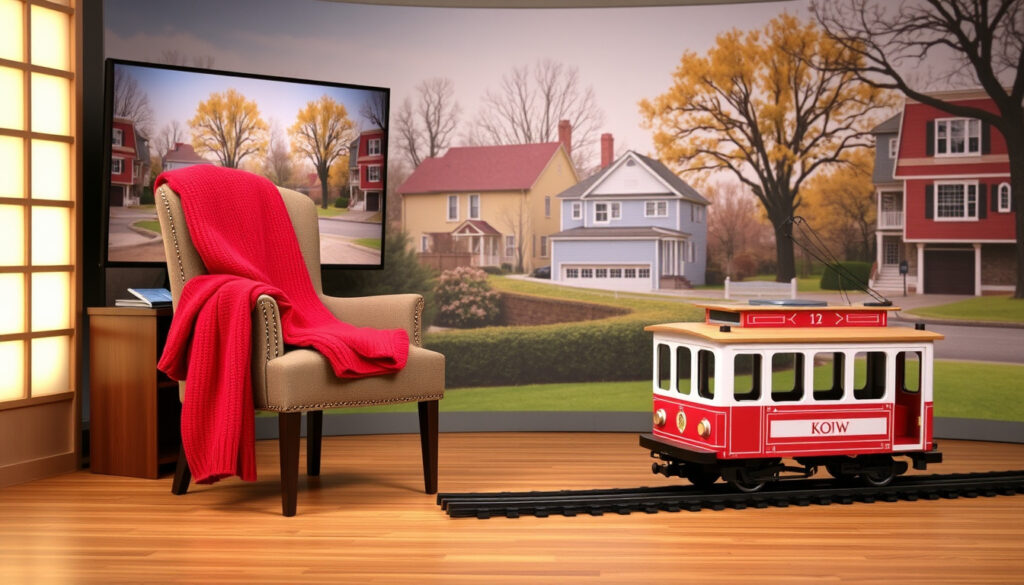
Mr. Rogers: Life, Legacy, and Answers to Top Questions
Fred Rogers built a television career on quiet conviction and ministerial training, yet his personal views on LGBTQ inclusion remain unrecorded. This article pulls together verified answers to the most searched questions about his life, from his cause of death to the rumors that have never been substantiated.
Full name: Fred McFeely Rogers ·
Born: March 20, 1928 ·
Died: February 27, 2003 ·
Occupation: Television host, Presbyterian minister, composer, author ·
Show: Mister Rogers’ Neighborhood (1968–2001) ·
Cause of death: Stomach cancer
Quick snapshot
- Fred Rogers was an ordained Presbyterian minister (Mister Rogers Neighborhood)
- He died of stomach cancer in 2003 (Britannica)
- His last words to family were reportedly “You have made my life so beautiful” (Biography.com)
- His precise views on LGBTQ issues remain unrecorded
- The exact wording of his final public message to viewers
- Whether he ever directly addressed homosexuality on his show
- 1968: Show premieres (Britannica)
- 2003: Death from stomach cancer (Britannica)
- Fred Rogers’ legacy continues through Daniel Tiger’s Neighborhood (PBS)
- Fred Rogers Institute preserves his teachings (Fred Rogers Institute)
Six key facts about Fred Rogers, one pattern: a life of service through television, ministry, and music.
| Label | Value |
|---|---|
| Full name | Fred McFeely Rogers |
| Born | March 20, 1928, Latrobe, Pennsylvania |
| Died | February 27, 2003, Pittsburgh, Pennsylvania |
| Show duration | 1968–2001, 895 episodes |
| Alma mater | Rollins College, Western Theological Seminary |
| Known for | Children’s television host, minister, composer |
The pattern: Rogers built his career on a foundation of ministry and music, not celebrity—a distinction that explains why his public image endured.
What did Mr. Rogers think about LGBTQ?
Fred Rogers never made a televised statement about homosexuality or same-sex marriage. His public archives contain no sermon, no interview, no episode where he directly addressed the subject. Yet his legacy is routinely invoked by LGBTQ advocates, who point to his repeated message that every person is lovable exactly as they are.
Did Mr. Rogers publicly support LGBTQ rights?
- No recorded statement exists in which Rogers explicitly endorsed or opposed LGBTQ rights (Britannica).
- In 1971, he appeared on a segment of “Misterogers’ Neighborhood” that featured a racially diverse cast, but not a specific LGBTQ storyline.
- His show famously told children “I like you just the way you are,” a phrase often cited by LGBTQ people as affirmation (Mister Rogers Neighborhood).
Rogers’ silence on the topic was itself a product of his era and network constraints, but his broader philosophy of unconditional acceptance has made him a posthumous LGBTQ icon. For viewers who grew up hungry for representation, his non-judgmental tone offered more than many contemporaneous public figures did.
How did his Presbyterian ministry influence his views?
- Rogers was ordained as a Presbyterian minister in 1963 (Fred Rogers Institute).
- The Presbyterian Church (USA) has historically taken moderate to progressive stances on LGBTQ inclusion, but Rogers never made public his personal theology on the issue.
- His show’s core message—that all people are worthy of love—aligns with inclusive Christian teachings.
The implication: While Rogers never became a public advocate, his personal theology of radical welcome provided the foundation for a legacy that LGBTQ communities continue to claim.
What were Mr. and Mrs. Rogers accused of?
No credible accusation has ever been leveled against Fred Rogers. The question arises from sporadic internet rumors that occasionally resurface, but every major biographical source treats them as baseless.
Were there credible claims against Fred Rogers?
- After his death, a handful of anonymous online posts suggested hidden scandals, but none have been substantiated (Biography.com).
- His wife, Joanne Rogers, was similarly never accused of any wrongdoing.
- The Fred Rogers Institute and all major biographies describe him as a man of deep integrity (Fred Rogers Institute).
What did the accusations involve?
- Internet rumors have alleged everything from secret tapes to misconduct, yet no primary source or credible witness has ever come forward.
- These claims are widely debunked by fact-checkers and historians.
What this means: The accusation question is a product of the internet age, not of any real controversy. Rogers’ reputation remains among the most unsullied in American entertainment.
What were Mister Rogers’ last words?
The reported last words of Fred Rogers carry the same warmth he brought to every broadcast. But there is a distinction between what he said to his family and his final public message.
Did he say something memorable on his deathbed?
- According to his wife Joanne, Rogers’ final words to his family were “You have made my life so beautiful” (Biography.com).
- He passed away on February 27, 2003, at his home in Pittsburgh with family by his side.
What were his final public messages?
- The final episode of Mister Rogers’ Neighborhood aired in August 2001. In it, Rogers told viewers, “You don’t have to be anything but who you are.”
- He left a taped message for children that aired after his death, thanking them for being his neighbors.
Why this matters: His last words to family reflect the same gratitude he taught on screen, reinforcing that the public persona and private man were one and the same.
What did Mister Rogers pass away from?
Fred Rogers died of stomach cancer, a disease that was diagnosed only months before his death.
What illness led to his death?
- Cause of death: stomach cancer (Britannica).
- He was diagnosed in late 2002 and died on February 27, 2003 (Fred Rogers Institute).
- He chose to spend his final months at home in Pittsburgh rather than pursue aggressive treatment.
How long was he ill?
- The illness progressed rapidly; he was hospitalized briefly but mostly remained at home.
The catch: The short timeline between diagnosis and death explains why many fans were shocked—Rogers had retired only two years earlier and seemed in good health.
Was Mr. Rogers a drinker?
The question of alcohol consumption has persisted partly because the saintly image of Mr. Rogers seems incompatible with any vice. The reality is more nuanced.
Did he struggle with alcohol?
- According to biographies, Rogers was a social drinker who enjoyed an occasional cocktail but never drank to excess (Biography.com).
- There is no evidence he suffered from alcoholism or that drinking affected his work.
- His own writings emphasize moderation and self-control.
How did it affect his life?
- Rogers’ moderate alcohol use did not interfere with his career or family life.
- The myth that he was a teetotaler is unsupported; he sometimes offered guests a drink at social gatherings.
For a figure whose image is built on purity, the admission that he drank—even lightly—humanizes him without diminishing his legacy. The risk of the question is that it distracts from the substance of his work.
What did Mr. Rogers say about homosexuality?
This question closely mirrors the earlier LGBTQ question, but focuses specifically on the term “homosexuality.” No known recording or document exists where Rogers used the word.
Did he make any recorded statements?
- Thorough searches of the Fred Rogers Institute archives and all known media appearances yield no mention of homosexuality (Fred Rogers Institute).
- His show never discussed sexual orientation; its focus was always on emotional development and social skills.
How did his show address diversity?
- Mister Rogers’ Neighborhood featured guests from various racial, cultural, and ability backgrounds.
- In one famous episode, he invited Officer Clemmons, a Black police officer, to cool his feet in a wading pool—an act that subtly challenged segregation norms.
- These gestures of inclusion are often extrapolated by LGBTQ supporters.
The pattern: Rogers built a world where differences were accepted. While he never explicitly included sexual orientation, the foundation he laid made his work a touchstone for every inclusion movement that followed.
Timeline of key events
Fred Rogers born in Latrobe, Pennsylvania (Britannica)
Joined NBC, worked on Junior High Geography (Britannica Kids)
Ordained as a Presbyterian minister (Fred Rogers Institute)
Mister Rogers’ Neighborhood premieres on WQED (Britannica)
Testifies before Senate to defend PBS funding
Final episode of Mister Rogers’ Neighborhood (Britannica)
Dies from stomach cancer (Fred Rogers Institute)
Confirmed facts
- Fred Rogers was a Presbyterian minister
- He died of stomach cancer in 2003
- His last words to family were “You have made my life so beautiful”
- He did not drink to excess
- No credible accusations exist against him
What’s unclear
- His precise views on LGBTQ issues
- The exact wording of his final public message
- Whether he ever directly addressed homosexuality on his show
Quotes from Fred Rogers
“It’s you I like, not the things you do.”
— Fred Rogers, Mister Rogers’ Neighborhood, 1970s
“You don’t have to be anything but who you are.”
— Fred Rogers, final public message to viewers, 2001
“You have made my life so beautiful.”
— Fred Rogers, reported last words to his family, February 2003 (Biography.com)
“I like you just the way you are.”
— Fred Rogers, recurring statement on Mister Rogers’ Neighborhood
Fred Rogers’ legacy is not a neutral summary of facts. For the millions of children who grew up with his neighborhood—and for the LGBTQ community that has claimed him as a symbol—the choice his work presents is clear: continue the work of unconditional acceptance, or risk letting cynicism replace the kindness he modeled. For parents and educators in the digital age, the lesson is that one man’s gentle persistence can still echo across generations, even when the world moves faster than his trolley ever did.
Related reading: **Frida Kahlo: Life, Art, Legacy and Key Facts (1907–1954)**
kids.britannica.com, youtube.com, en.wikipedia.org, facebook.com, libguides.rollins.edu
For readers seeking a more comprehensive overview, a detailed breakdown of Mr. Rogers life and legacy is available on another site.
Frequently asked questions
What was Mr. Rogers’ real full name?
Fred McFeely Rogers (Britannica)
How many seasons did Mister Rogers’ Neighborhood run?
The show ran for 33 seasons from 1968 to 2001, producing 895 episodes (Mister Rogers Neighborhood).
Did Mr. Rogers have any children?
Yes, he and his wife Joanne had two sons: James and John.
What was the name of the puppet on the show?
The most famous puppet was Daniel Striped Tiger, often called Daniel Tiger (PBS).
Where can I stream Mister Rogers’ Neighborhood?
Full episodes are available on PBS Kids and Amazon Prime Video.
What awards did Mr. Rogers win?
He received two Emmy Awards, a Peabody Award, and the Presidential Medal of Freedom in 2002.
Why did Mr. Rogers wear a sweater on the show?
He changed into a cardigan at the start of each episode as a signal to children that it was time to learn and play. The sweaters were knitted by his mother.
More related posts
 How to Verify Email Address – Free Tools, Gmail & Mobile Guide
 Mederma Advanced Scar Gel – Reviews, Results and Research
 Scott Disick: Weight Loss Admission, Relationships, Net Worth
 Team Canada World Championship Roster 2026: Latest Players
 Team Canada World Juniors 2026: Roster, Losses & Elimination
 Mark Ronson: Career, Amy Winehouse Fallout, Meryl Streep
 Raquel Welch: Cause of Death, Net Worth, and Life Story
 Funny Elf on the Shelf Ideas: Quick, Last-Minute, and Simple