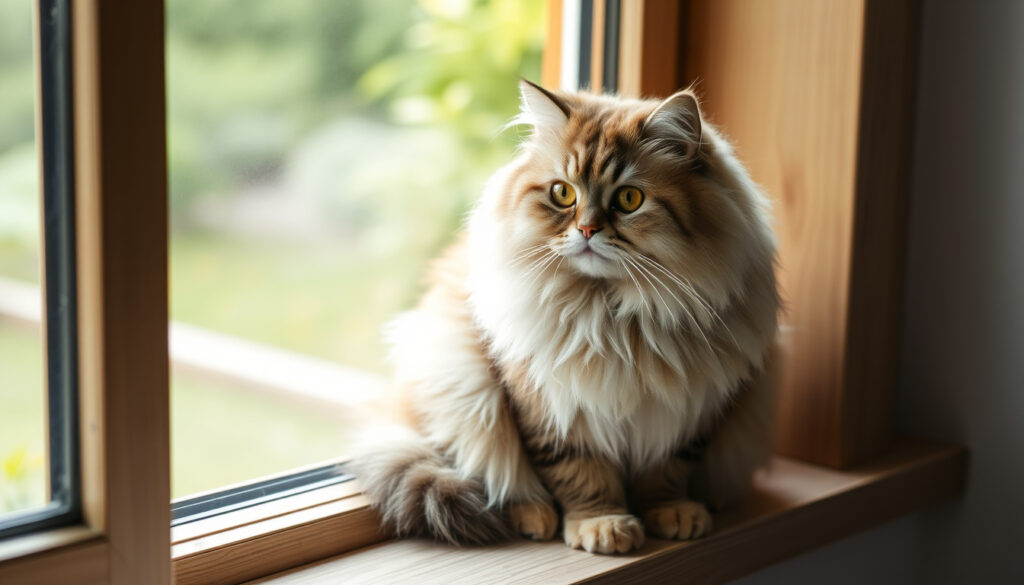
Siberian Cat: Guide to Temperament, Care & Allergies
Few cat breeds spark as much curiosity as the Siberian — especially if you or someone in your household deals with cat allergies. This guide sorts the scientific facts from the marketing talk so you can make an informed choice.
Origin: Russia (Siberia) ·
Average Weight (Male): 6-9 kg (13-20 lbs) ·
Average Weight (Female): 4-6 kg (9-13 lbs) ·
Coat Type: Semi-longhaired, triple coat ·
Hypoallergenic Potential: Lower Fel d 1 levels (not guaranteed) ·
Lifespan: 12-15 years
Quick snapshot
- Siberian cats are a pure breed from Russia (Cat Fanciers’ Association (CFA) official breed profile)
- They produce lower levels of Fel d 1 than most breeds, but individual variation is high (PubMed Central study on Siberian cat allergen variability)
- They have a semi-longhaired triple coat (CFA breed profile) (Cat Fanciers’ Association (CFA) official breed profile)
- Males reach 6-9 kg, while females are smaller at 4-6 kg (CFA breed profile) (Cat Fanciers’ Association (CFA) official breed profile)
- The exact genetic timeline of the breed’s development is uncertain (CFA breed history notes)
- Individual cats vary in Fel d 1 levels; no cat is 100% hypoallergenic for all people (PubMed Central study)
- 1000+ years ago: Earliest documented evidence of Siberian cats in Russia (CFA breed history)
- 1980s: First export of Siberian cats to Europe and the United States (CFA breed history)
- 1990: Formal breed recognition began in the Soviet Union (CFA breed history)
- 2000 (approx.): Championship status from TICA and CFA (CFA breed recognition timeline)
- If you’re considering a Siberian, spend time with the specific cat before adoption to test your own reaction (Merck Veterinary Manual advice for allergy sufferers)
- Plan for regular grooming and a high level of interactive play (CFA care recommendations) (Merck Veterinary Manual advice for allergy sufferers)
Several quick facts at a glance, one pattern: the Siberian is a physically robust, historically ancient breed whose modern career was built on both its looks and its rumored allergy-friendly nature.
| Attribute | Details |
|---|---|
| Breed Name | Siberian |
| Country of Origin | Russia |
| Coat Pattern | All traditional patterns (tabby, solid, colorpoint) |
| Shedding Level | High (seasonal) |
| Activity Level | Medium to High |
| Intelligence | High |
| Vocality | Medium (not as vocal as Siamese) |
Is a Siberian Cat a Good Pet?
Key personality traits that make a Siberian cat a good pet
Siberians are widely described by the Cat Fanciers’ Association (CFA) official breed profile as affectionate, social, and playful. They often form strong bonds with their owners and display what many call a “dog-like” loyalty — greeting you at the door and following you from room to room. Their intelligence means they enjoy puzzle toys and interactive play, which makes them engaging companions for adults and children alike.
Are Siberian cats good for families?
Yes, most owners report that Siberians are patient with children and generally get along well with other pets, including cat-friendly dogs. CFA breed notes emphasise their adaptability to households with multiple animals. The catch: their high energy and size mean they need enough space and vertical territory (cat trees, shelves) to stay content.
Your family gains a playful, loyal cat that thrives on interaction. In return, you commit to at least 20 minutes of active play daily and a home with cat-friendly climbing structures.
What Is So Special About Siberian Cats?
The Siberian cat’s hypoallergenic reputation
The special status of the Siberian rests heavily on its reported lower production of the Fel d 1 protein, the primary allergen in cats. A PubMed Central study on Siberian cat allergen variability confirmed that while many Siberians produce less Fel d 1 than other breeds, individual variation is substantial. Some Siberians produce levels as high as any cat. The AAHA/AAFP Feline Allergy Management Guidelines (veterinary authority) stress that no breed is truly allergen-free, and reactions depend on the person’s sensitivity and the specific cat.
Unique physical characteristics of the Siberian cat
Beyond allergens, the Siberian stands out for its physical build. It carries a dense triple coat — a thick undercoat for warmth, a medium awn coat, and a longer guard coat — that adapts to seasonal changes, as documented by the CFA breed standard. The breed is slow to mature, often reaching full size at four to five years. A few spec numbers, one pattern: this is a muscular, medium-to-large cat built for cold climates, not a lap ornament.
| Spec | Siberian |
|---|---|
| Body type | Cobby to semi-foreign, muscular |
| Weight (male/female) | 6-9 kg / 4-6 kg |
| Coat length | Semi-longhaired |
| Undercoat | Dense, seasonal |
| Face shape | Rounded, with full cheeks |
| Eye colour | All colours accepted, often green or gold |
| Ear tips | Rounded, with moderate tufting |
| Tail | Thick, medium length, heavily furred |
The implication: the hypoallergenic claim is real in the aggregate but not a guarantee. Anyone with allergies should test their reaction with the specific cat they plan to adopt — the same advice given by the CDC Healthy Pets: Cats (public health guidance).
What Is the Difference Between a Russian Cat and a Siberian Cat?
Russian Blue vs. Siberian cat: key differences
In common usage, “Russian cat” often refers to the Russian Blue, a distinct breed with a short, dense blue-gray coat, a slender build, and a famously shy but loyal personality. The Siberian, by contrast, is a longhaired breed that comes in a wide array of colours and patterns — tabby, solid, colorpoint, and more. The CFA breed standard for the Siberian describes a rounded face and heavy bone structure, while Russian Blues are finer-boned and known for their characteristic “smile.”
Other cat breeds from Russia
Russia is home to several other native breeds, including the Don Sphynx (hairless), the Donskoy, and the Kurilian Bobtail. None of them share the Siberian’s combination of a triple coat and large size. The distinction matters for prospective owners: if you’re after a longhaired, friendly cat with potential allergy benefits, the Siberian is the right Russian breed to consider — not the Russian Blue.
Siberian buyers who confuse the breed with the Russian Blue risk ending up with a cat that has a completely different coat type and temperament. Check the breed standard before you buy.
Is a Siberian Cat a Maine Coon?
Two large longhaired breeds, one pattern: each has a distinct history and set of traits. The table below shows the main differences.
| Feature | Siberian | Maine Coon |
|---|---|---|
| Country of origin | Russia | USA (Maine) |
| Size (male) | 6-9 kg | 7-11 kg |
| Face shape | Rounded, full cheeks | Rectangular, with a square muzzle |
| Coat texture | Triple coat, soft and fluffy | Shaggy, with a silky topcoat |
| Shedding pattern | Heavy seasonal blow | Moderate year-round, heavy seasonal |
| Personality | Very affectionate, dog-like | Gentle, playful, often called “gentle giant” |
| Vocality | Medium, chirps and purrs | Low to medium, trills |
The pattern: both are magnificent large cats, but the Siberian is more likely to be cuddly and higher-pitched in voice, while the Maine Coon tends to be a quieter, shaggier giant. Choose based on which facial structure and personality you prefer.
What Is the Typical Siberian Cat Size and Personality?
Siberian cat size: male vs female
Sexual dimorphism is pronounced in this breed. According to the CFA breed standard, males typically weigh 6-9 kg (13-20 lbs), while females weigh 4-6 kg (9-13 lbs). Males also have broader heads and heavier bone structure. Females are sleeker but still muscular. Both sexes reach full size only after 4-5 years.
Siberian cat personality traits
Beyond size, the Siberian personality is consistently described as intelligent, playful, and interactive. They enjoy high vantage points and are agile jumpers. The CFA profile notes their “dog-like” behaviour: following owners, fetching toys, and even greeting visitors. They are not typically destructive if given adequate stimulation.
Why this matters: a smaller female may be a better fit for a quieter household, while a larger male brings more physical presence. Meet the individual cat, not the breed stereotype.
What Are the Downsides and Cons of Siberian Cats?
Upsides
- Affectionate and good with families
- Lower Fel d 1 levels in many individuals (PubMed Central study)
- Playful, intelligent, and trainable
- Robust health with few breed-specific issues
Downsides
- High grooming requirement: brush 2-3 times weekly (CFA care notes)
- Seasonal heavy shedding that coats furniture
- High prey drive — may not suit homes with rodents or fish
- Prone to Hypertrophic Cardiomyopathy (HCM) (Merck Veterinary Manual: HCM in cats)
The Siberian’s grooming load and energy demands are the price you pay for that lush coat and playful personality. If you can’t commit to twice-weekly brushing and at least 20 minutes of interactive play, this breed may overwhelm you.
What We Know and What Remains Unclear
Confirmed facts
- Siberian cats are a pure breed originating from Russia (CFA)
- They have a semi-longhaired triple coat (CFA)
- They are larger than average domestic cats (CFA)
What’s unclear
- The exact genetic timeline of the breed’s development is uncertain (CFA history)
- Individual cats vary in Fel d 1 levels; no cat is 100% hypoallergenic for all people (PubMed Central study; Merck Veterinary Manual)
- Siberians produce lower levels of Fel d 1 on average, but individual variation is high, so no guarantee for allergy sufferers (PubMed Central study)
“The Siberian cat is a slow-maturing, medium-to-large breed with a rounded head, wide forehead, and full cheeks.”
— Governing Council of the Cat Fancy (GCCF) breed standard (via CFA)
“Prospective owners with cat allergies should spend time with the individual cat they intend to adopt before making a decision. No breed can guarantee a reaction-free experience.”
— Merck Veterinary Manual (clinical resource for veterinarians)
“We found that Fel d 1 concentrations in Siberian cats varied widely, with some individuals producing levels as high as typical domestic cats. The breed-level averages are lower, but each cat is different.”
— Published research in the International Journal of Molecular Sciences (2018)
For allergy sufferers in Ireland, the decision path is clear: test your reaction to the specific cat you’re considering, and be prepared to manage grooming and activity demands. If you’re looking for a calm lap cat, a female Siberian might work; if you want an active, interactive companion, a male may be the better fit. The breed is not a medical solution — it’s a wonderful cat that happens to be easier on some allergic people.
untamed.com, siberianreinhardt.com, royalgracesiberians.com, youtube.com
If you’re drawn to large, fluffy breeds, you might also enjoy exploring available Maine Coon kittens from reputable breeders.
Frequently asked questions
How much does a Siberian cat cost?
Prices vary by location and pedigree, but in Ireland you can expect to pay between €600 and €1,200 from a registered breeder. Always verify health testing for HCM.
Do Siberian cats get along with dogs?
Yes, they are generally sociable and can coexist happily with cat-friendly dogs. Their playful nature often matches well with canine energy.
How often should I groom a Siberian cat?
At least twice a week, and daily during heavy seasonal shedding (spring and autumn). A stainless steel comb and a slicker brush are recommended.
Are Siberian cats indoor or outdoor cats?
They adapt to indoor life but need plenty of stimulation. Many owners provide a secure outdoor enclosure (“catio”) to satisfy their curiosity safely.
What is the best diet for a Siberian cat?
A high-quality wet food with moderate protein and fat content, plus dental dry food. Supplements like omega-3 help maintain coat health.
Siberian cat vs. Norwegian Forest Cat: what’s the difference?
Both are large longhaired breeds from cold climates. Norwegian Forest Cats have a more triangular face and a water-repellent topcoat, while Siberians have a rounder face and a softer triple coat.
How can I find a reputable Siberian cat breeder in Ireland?
Check the Irish Cat Society or the GCCF website for registered breeders. Ask about HCM screening and request to visit the cattery in person.
More related posts
 Mark Ronson: Career, Amy Winehouse Fallout, Meryl Streep
 Codes for Hunty Zombie – Active List and Redemption Guide
 Scotiabank Car Loan Calculator 2025: Rates, Payments & Guide
 One Direction Members: Liam Payne Death and Funeral Facts
 Shoppers Drug Mart Sarnia: Locations, Hours & Pharmacy Guide
 House of Knives Canada – Locations, Brands, Services Guide
 32 kg to lbs – Exact 32 kg to Pounds Conversion (70.55 lb)
 William H. Macy: Age, Wife, Movies, Net Worth, Bio